
How to Search the Seminary Court Docket
Seminary offers no online docket search. The city posts no public case lookup, no docket calendar, and no public-records form. So a Seminary case search runs through paper and phone calls. Pull out the original citation or court notice and read it closely. The court named there governs the request. A city name alone tells you little about venue. The matter could sit in Seminary's own court, Justice Court, Circuit Court, or elsewhere.
Before calling, gather the essentials. You want the citation or case number, the name exactly as printed, the approximate date, and the issuing agency. Then ask City Hall or the Seminary municipal clerk three things. Which clerk currently handles the matter? Whether an appearance is scheduled? How to request a copy of the record?
- Read the Seminary citation or notice and identify the named court before searching.
- Record the Seminary citation or case number, date, and issuing agency exactly as shown.
- Contact Seminary City Hall or the Seminary municipal clerk to request the current court contact and record-copy procedure.
- If the Seminary paper names Justice, Circuit, Chancery, or another court, use that court's clerk and authorized access channel.
- Confirm any Seminary appearance date directly with the court that holds the record.
Seminary Municipal Contact Check
One directory entry anchors a Seminary contact check. The Secretary of State municipal-government reference lists the city at P.O. Box 295, phone 601-722-9426, fax 601-722-9428, and names Charlotte Dunn as municipal clerk. Treat that listing as a starting point only. It confirms who and where. It is no proof of a current court schedule or a dedicated court office. Contact details do drift over time. A Seminary caller should ask City Hall to confirm the current court person before relying on the directory.
Ask a narrow question when you call. Which office holds the citation now? Has a court date been set? What is the process for a docket sheet or certified record? The listing names no online docket portal, no judge, no courtroom, no payment method, and no fine schedule. Those answers come from the clerk, not the directory.
Seminary Municipal Reference
P.O. Box 295
Seminary, Mississippi
Phone: 601-722-9426
Fax: 601-722-9428
Municipal clerk listed: Charlotte Dunn
The Seminary Municipal Court
Mississippi municipal courts generally handle city ordinances plus limited criminal and traffic matters. Seminary, though, publishes no current municipal-court page. The court's jurisdiction, judge, clerk, session schedule, location, payment process, and any online docket all await confirmation through City Hall or the sitting clerk. Do not borrow those details from Collins, Mount Olive, or Covington Justice Court. Their rules govern their cities, not Seminary.
A missing web page is just an access fact. It does not mean no proceeding exists. Nor does it mean a citation was dismissed, or that every Seminary citation heads to the county courthouse. Keep the citation and show it to the current court contact. That office can name the correct court. It can also explain the lawful route to the specific record you need.
Seminary Court Details Unverified
Plenty of routine facts about Seminary court remain unconfirmed. Session days, the courthouse address, the presiding judge, the prosecutor, the fine table, payment options, the citation format, and any public case search all lack a published source. Resist the urge to fill the gaps with a neighbor's numbers. Collins documents its session schedule and payment terms. Mount Olive publishes hours and procedure notes. Neither governs a Seminary case.
When a Seminary fact touches a deadline, an appearance, or a payment, go to the court holding the original record and get confirmation. Write down the office name and the date of the answer. Add the staff contact if one is offered. Routes can shift. A citation may come from a different agency or land in a different court than expected.
Seminary verification point: The city publishes no current court page or public docket search, so confirm any citation with City Hall or the municipal clerk before acting on it.
Seminary Court Dates and Settings
No public calendar covers the Seminary municipal court. A court date should come straight from the citation, a court notice, or the current court contact, never from a general county calendar. The 13th Circuit public calendar lists Circuit settings only. A Seminary name appearing on it does not put a city citation before Circuit Court.
Know what a setting is. It is a scheduled event. That event might be an arraignment, hearing, trial, status conference, or another appearance. A setting is not a result. A continuance, a reset, a court order, or a closure can move the date. Confirm the current Seminary date with the court directly, above all when the citation or notice sets an appearance deadline.
| Date | Use the Seminary citation, court notice, or current clerk confirmation; no public municipal schedule was located. |
|---|---|
| Time | Ask the Seminary court contact for the current time and whether the time is a docket call or individual setting. |
| Courtroom | Verify the Seminary location with City Hall or the municipal clerk because no current court location was found. |
| Judge | Ask Seminary to identify the current presiding judge; no current official judge listing was located. |
| Setting Type | Ask whether the Seminary event is an arraignment, hearing, trial, compliance appearance, or another court event. |
Seminary Citation Routing
The citation, not the court name alone, tells a Seminary driver where the case lives. Look for the issuing agency, the court, the date, the offense or ordinance, and the citation number. Anything unclear? Call the municipal clerk or City Hall and ask who handles the paper now. There is no single universal Seminary traffic process. A state calendar may not hold the case at all.
County Justice Court takes a separate set of traffic and limited criminal matters. That includes listed Mississippi Highway Patrol and Sheriff tickets. Circuit Court can receive a Justice Court appeal. It also takes a matter that outgrows the lower court. So a Seminary traffic question should not jump to the Thirteenth Circuit calendar unless the citation, the clerk, or a later filing names Circuit Court.
Note: The court printed on a Seminary citation is the first routing fact. That holds even when the person lives or was stopped inside Seminary.
Seminary Traffic Tickets
Seminary posts no clerk or judge details online. Nothing covers the session date, fine, payment method, or online ticket lookup either. That gap matters. A Seminary traffic ticket should never be paid through another city's form, and another municipality's rules say nothing about prepayment here. Call City Hall or the municipal clerk. Read off the citation, and ask for the current court and payment instructions.
Facing an appearance or a contest? Ask the court named on the ticket before the date shown. The Mississippi Department of Public Safety sends citation disputes to the court on the citation, not to DPS. For countywide context, Covington County traffic court records helps, but it cannot replace the current Seminary court contact for an individual city citation.
Seminary Docket Terms
Seminary court material is thin. Still, the words on a citation carry clear meaning. A Seminary docket is a record or schedule of activity, not automatically the full file. A calendar lists future events. An order or judgment is the operative court action. When a term affects what someone must do, check it with the responsible clerk.
- Docket
- A chronological court index or, in some local practice, a schedule of Seminary court activity.
- Setting
- A Seminary date assigned for an appearance, hearing, trial, or other court event.
- Continuance
- A postponement or reset that can move a Seminary court date.
- Disposition
- A recorded procedural result or outcome that should be confirmed from the responsible court record.
No Seminary online result does not prove a dismissal or a final outcome. The matter may be unindexed, restricted, pending in another court, or closed to public remote access.
Where Seminary Cases End Up
Not every Seminary legal matter stays on a local municipal route. Justice Court handles limited civil, criminal, and traffic duties. Circuit Court, District 13, holds general civil and criminal jurisdiction over matters not assigned elsewhere. Chancery Court covers family, probate, equity, land, and related issues. A Seminary address does not collapse those separate court systems. It never merges them into one docket.
Docket flow: Seminary local court contact › Covington Justice or Circuit Court › Thirteenth Circuit Court District
Once a Seminary matter is confirmed as a county-level Circuit case, the 13th Circuit calendar can show settings, and MEC/PAMEC or the Circuit Clerk can open the broader record route. For that structure, start with the Covington County court docket. Until Seminary confirms a transfer or a court name, a city citation stays a Seminary contact question.
Seminary Docket Source Order
A Seminary search has a clear order of sources. The original citation or court paper names the initial court. City Hall can verify the current local court contact. The municipal clerk covers the record-copy procedure. The state municipal reference backs up Seminary's basic municipal contact information, while county and state systems serve only the courts that actually hold a later case. Follow that order. An online source from another court never gets mistaken for a Seminary docket.
| Seminary source | Supported use | Limit |
|---|---|---|
| Citation or court notice | Initial court, date, issuing agency, and case identifier. | May not provide a full Seminary docket history. |
| City Hall or municipal clerk | Current Seminary court contact and record-copy process. | Current details need confirmation. |
| Secretary of State reference | Seminary mailing, phone, fax, and municipal-clerk listing. | Not a live court calendar or case search. |
| 13th Circuit or PAMEC | Verified county-level Circuit settings or eligible MEC records. | Not a public Seminary municipal docket. |
The state municipal-government reference is the documented source for Seminary's basic municipal contact information.
Public Access to Seminary Court Records
Access in Seminary takes both a local request and the state framework. Mississippi's Public Records Act sits at Title 25, Chapter 61. It sets the public-record policy. The Act allows reasonable request procedures, recognizes exemptions, permits actual-cost charges, and includes an enforcement path. Court records also call for attention to judicial authority and court rules. So a Seminary request should ask the current record custodian. Ask which procedure applies to the record sought.
Describe the Seminary record narrowly. Give the citation or case number if known, the approximate date, record type, and whether a plain or certified copy is needed. Do not count on a ready-made Seminary form or portal. If the clerk says a record is restricted, request the governing procedure. Do not try to bypass access controls. PAMEC covers remote non-restricted records in participating MEC courts. It is not a proven Seminary municipal route.
Key Rules:
Mississippi Public Records Act, Title 25, Chapter 61 describes public-record access principles and request procedures.
Mississippi Code §25-61-5 makes public records available subject to statutory exemptions and reasonable procedures.
Mississippi Code §25-61-7 limits applicable public-body copy and production charges to actual cost.
MEC Administrative Procedures §7 describes remote subscriber access and courthouse or clerk-office electronic viewing where available.
The Mississippi Public Records Act source accompanies this Seminary court-record image.
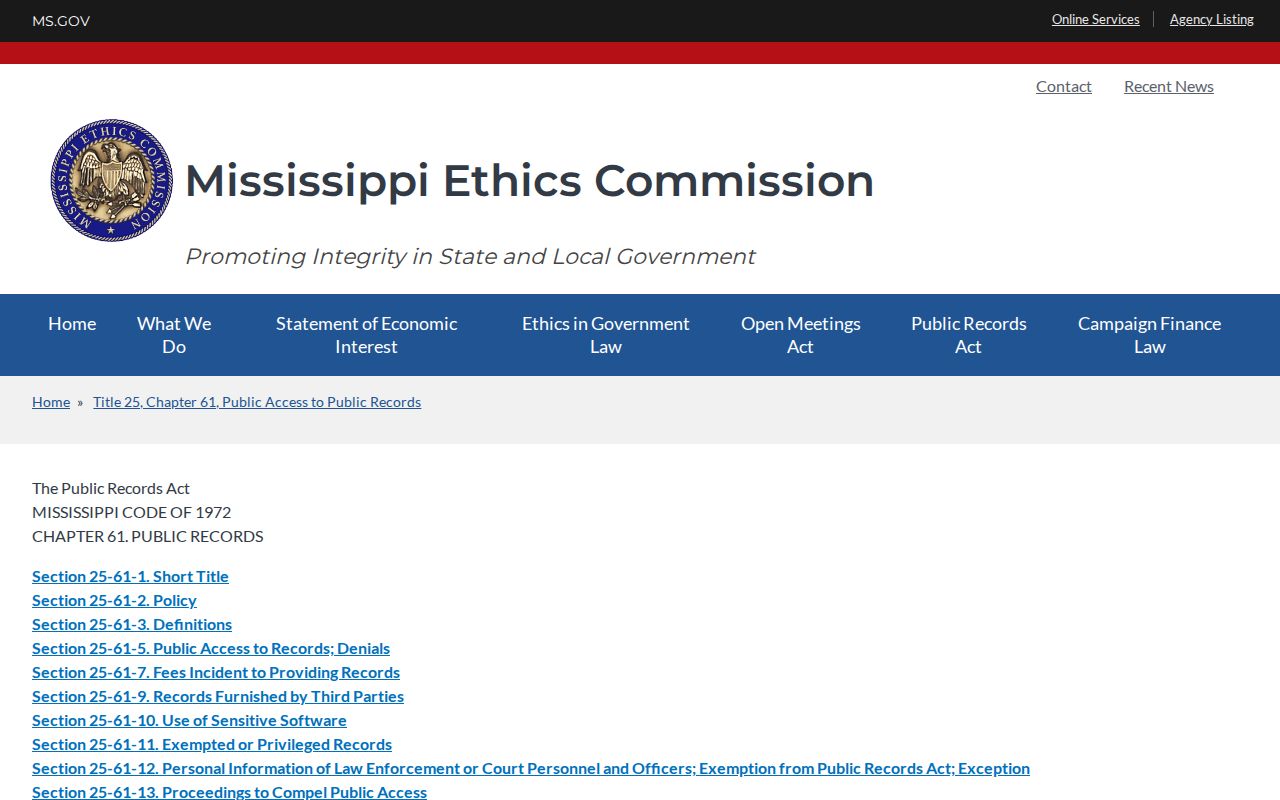
State access law frames a Seminary request but creates no searchable municipal court database.
Seminary Court Census Context
Seminary ranks third among Covington County's three incorporated places in the 2020 Census table. It is also the smallest. That small-city setting explains why a reader may need direct Seminary confirmation rather than a polished online court interface. The setting does not soften the need to identify the court holding a Seminary case. Verify the current court date, too.
The 2020 Census incorporated-place source provides the setting shown in this Seminary court-record image.
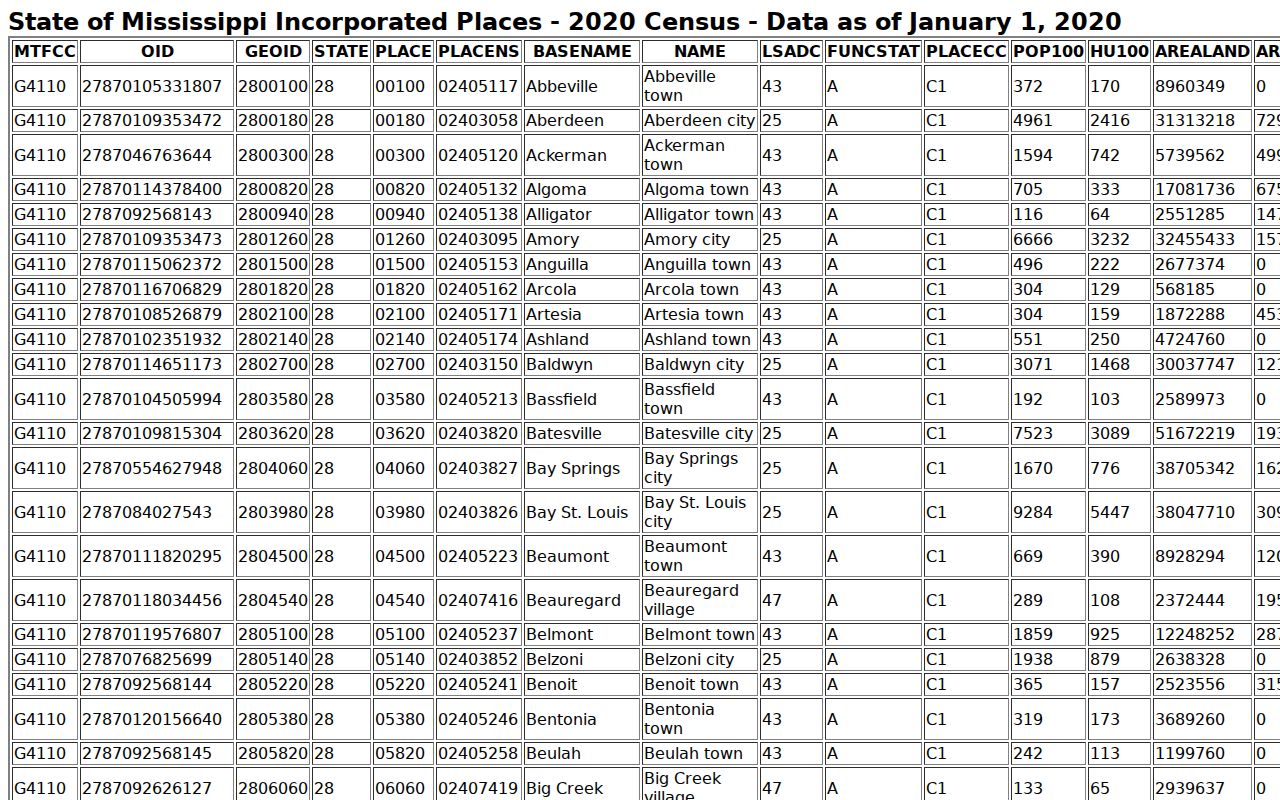
Seminary's size changes nothing about the separate record routes. Municipal, Justice, Circuit, Chancery, and restricted matters each keep their own path.