
How to Search Civil Dockets
Covington County posts no free, open countywide civil case-search page. The state option is Mississippi Electronic Courts, which this county's courts use. Registered PAMEC users can pull docket sheets and electronic filings from anywhere. A fee applies. Access covers non-restricted civil and criminal cases. The Circuit calendar is free to browse. It lists settings, though. It is not a full case lookup. A Circuit civil search can run through PAMEC/MEC or the Circuit Clerk. Start by identifying the court. Family, probate, equity, property, and guardianship matters sit with the Chancery Clerk. Any Chancery MEC records go there too. Smaller civil suits may belong in Justice Court, which offers no public online search form. Search by case number when you have one. Otherwise use party name, filing period, case category, and the document you need.
- Determine whether the matter belongs in Circuit, Chancery, or Justice Court.
- For an available Circuit or Chancery electronic case, register for PAMEC and use the lawful subscriber route.
- Use the 13th Circuit calendar only to locate a Circuit hearing setting.
- Ask the proper clerk for a docket sheet, pleading, order, or certified copy when a portal result is unavailable.
- Confirm the exact document and certification need before any copy charge is incurred.
Covington Civil Docket Court Routes
Covington County splits civil work across several courts. Circuit Court hears general civil claims that no other court exclusively owns. Chancery Court handles family and domestic relations. Probate, adoptions, estates, guardianships, conservatorships, minor settlements, and land or title disputes also belong there. Justice Court takes lower-dollar civil suits and other limited matters. A municipal court may handle city code or administrative issues it is authorized to hear. Don't assume a private civil dispute lands on a municipal docket, though. Knowing the right route saves a wasted docket search.
| Court | Typical civil record | Custody route |
|---|---|---|
| Thirteenth Circuit Court District | General civil matter and Justice Court appeal | Circuit Clerk, MEC/PAMEC, and calendar for settings |
| Thirteenth Chancery District | Family, probate, equity, land, and guardianship matters | Chancery Clerk and available Chancery MEC records |
| Covington Justice Court | Limited civil suit | Justice Court Clerk; no public online case form located |
The Covington County Chancery Clerk page names Guy Easterling as clerk. It lists probate, guardianship, divorce, custody, adoption, property, and equity duties.
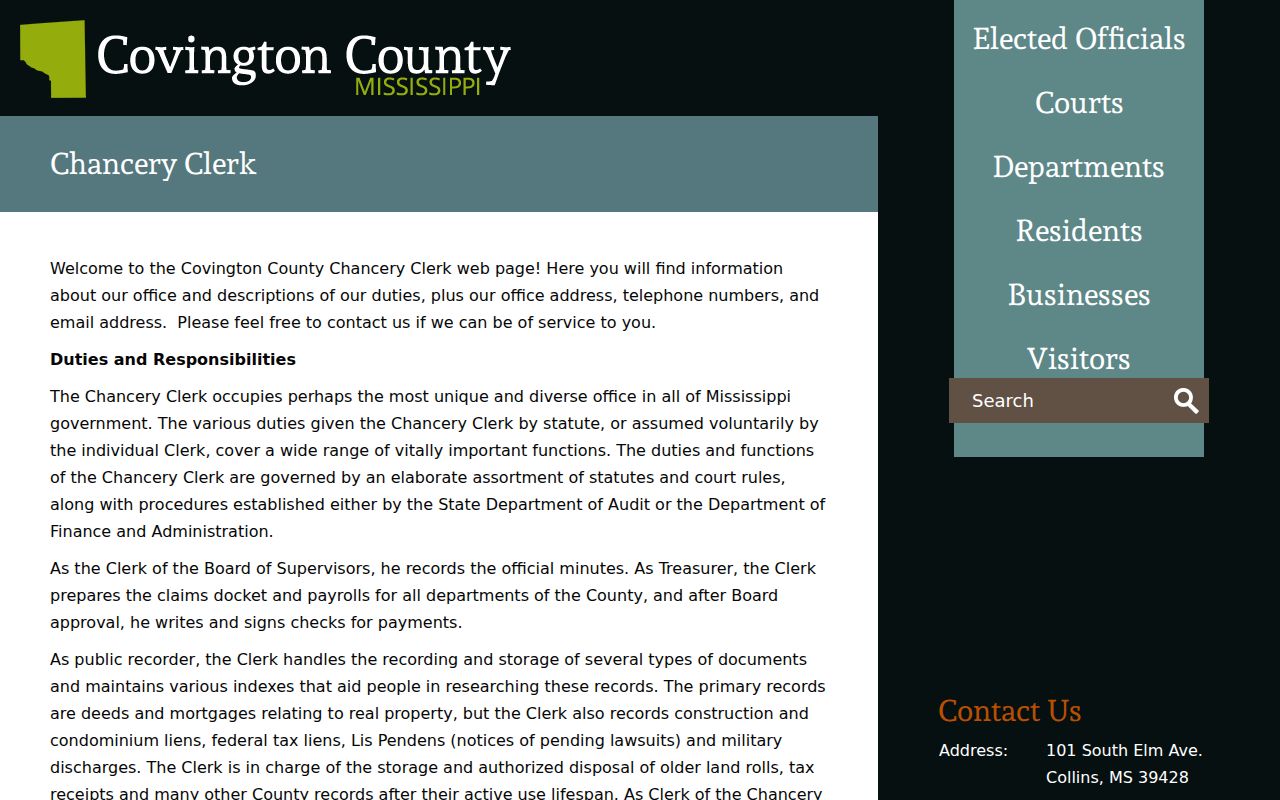
Note: The Chancery Clerk is a records route. Confirming whether a specific matter is restricted still takes a separate check with the court.
What a Civil Docket Shows
Rule 79 of the Mississippi Rules of Civil Procedure sets out what a general docket holds. It works as a chronological index. Filed papers, process and returns, appearances, orders, verdicts, and judgments all get brief entries with their date and a short statement of their nature or substance. So you can often trace the whole arc of a Covington County civil case from the docket alone. The underlying documents are a different matter. Pleadings, exhibits, affidavits, discovery, orders, and judgments live in the case file, which may carry its own access route or its own restrictions.
| Case or cause number | The court-assigned identifier, represented here as case/cause number as issued, not a guessed local format. |
|---|---|
| Filed paper | A complaint, answer, motion, or other record added to the chronological entry list. |
| Process or return | Service-related activity or the return recorded for court process. |
| Setting or order | A scheduled event or a court action that may control the next case step. |
| Judgment | A ruling that should be read with later post-judgment or appeal entries. |
A docket sheet is not a pleading. Keep that distinction in mind. An entry tells you a document was filed and when, but the document itself may take PAMEC access, a request to the clerk, or special handling to see.
Covington Civil Docket Rule 79
Rule 79 gives the best state-level picture of how a civil general docket tracks a Covington County case from start to finish. Order tells the story. A complaint opens the file, then a summons or service return shows the other side got notice. An answer, a motion, or a hearing can follow. A judgment or appeal entry may close things out or move them up. Read each entry's date and description side by side. When the precise ruling matters, pull the order the entry points to.
- Motion for summary judgment
- A request for a ruling, not proof that the court granted it.
- Motion to compel
- A request concerning a discovery dispute, not the resulting court order.
- Replevin
- A civil claim seeking recovery or possession of property.
- Docket call
- A scheduled listing used to organize, set, or address the readiness of matters.
A Justice Court Appeal label on the Circuit calendar marks a case that came up from Justice Court. It signals an appellate path, not the filing of a brand-new ordinary Circuit civil case.
Types of Civil Cases on the Docket
Civil matters in Covington County split across three courts. Circuit Court takes general civil claims. Chancery Court carries the wider set, from family and probate to equity, land, and property records. Justice Court keeps only its limited civil jurisdiction. A Circuit calendar may use entries like civil docket, civil docket and docket call, replevin, motion to compel, motion for summary judgment, Rule 30(b)(6), trial setting, and Justice Court appeal.
Labels tell you what a setting concerns. They decide nothing about the merits. Before treating a final judgment as the last word on the court docket, read it with any later motions or appeal entries in the file.
Covington Civil Docket Land Records
DuProcess is the right tool for Covington land instruments and Board Minutes. It is not a civil lawsuit docket. Name, date, instrument number and type, book and page, legal description, parcel, subdivision, and address fields are all searchable there. A deed, mortgage, lien, or lis pendens result can connect to a dispute. It does not prove a court case was filed. Nor does it show how the dispute was decided.
For a Chancery case record, go through the Chancery Clerk or the available MEC/PAMEC route. The Chancery MEC court-information page confirms the district's electronic court route.
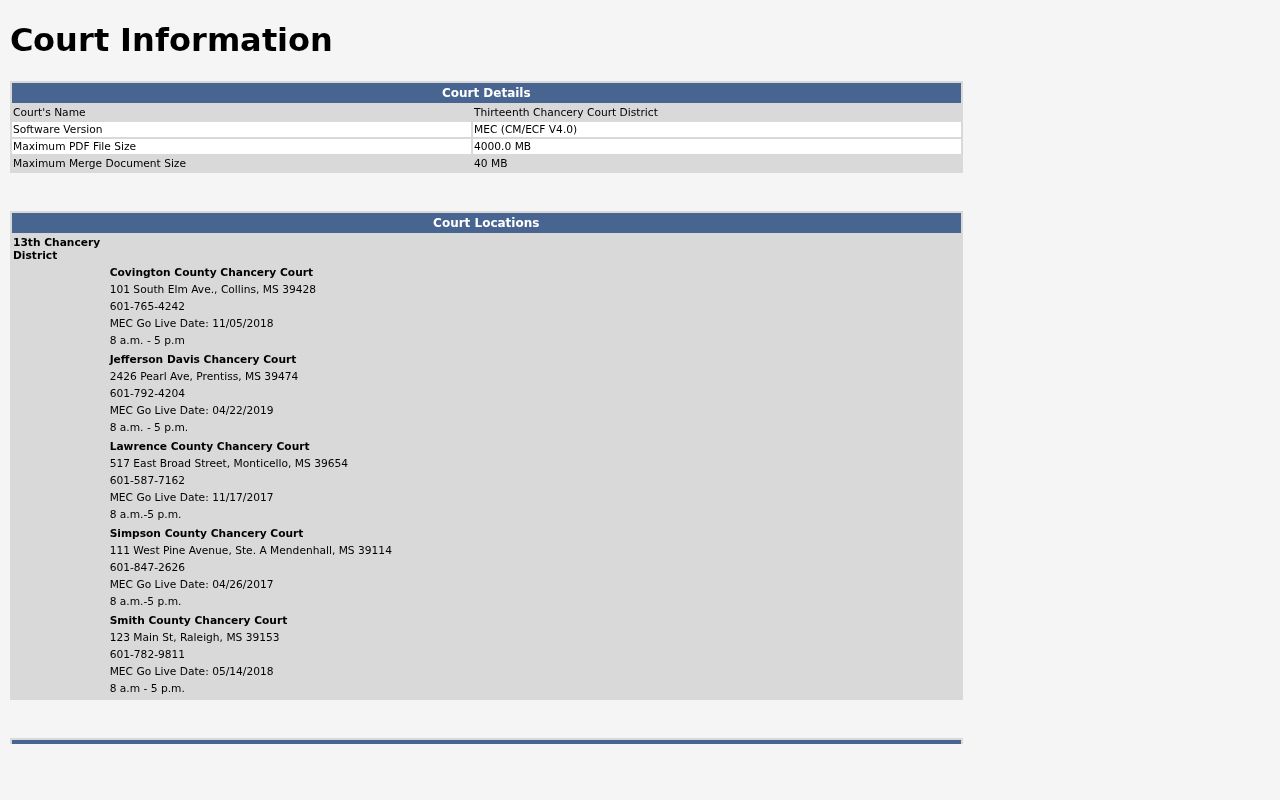
The separate system names keep a property-instrument search from being confused with a civil docket search.
Settings and Hearings on Civil Dockets
A civil setting on a Covington County docket is just a scheduled court event. It is not automatically the final hearing. The 13th Circuit calendar entry may list the county, judge, date, and time. It may also show the docket type. Some details go further, showing a cause number, style, motions, and attorney. Nothing there is fixed. A continuance, a conflict, a settlement, a judicial order, or a courtroom change can all move or erase a future setting. Scan the docket for later entries first.
For a Circuit case, the public calendar is the schedule you can see. The fuller sequence of filings and orders lives elsewhere. Try the PAMEC/MEC docket or the clerk's file. Chancery and Justice Court matters are different. Route those to their own clerks instead of assuming they appear on the Circuit calendar. Confirm any critical appearance with the responsible clerk or attorney of record.
Covington Civil Docket Access Gate
Covington County's direct Chancery MEC query frame sits behind authentication. It accepts a MEC filer or PAMEC credential, and some access is limited to attorneys of record. So a blank result means little. Treat an inaccessible answer as a wall, not as proof that no case exists. For restricted or unavailable material, use a lawful clerk route. The authenticated Chancery MEC query source also cautions filers against including sensitive identifiers in filings except as court procedures allow.
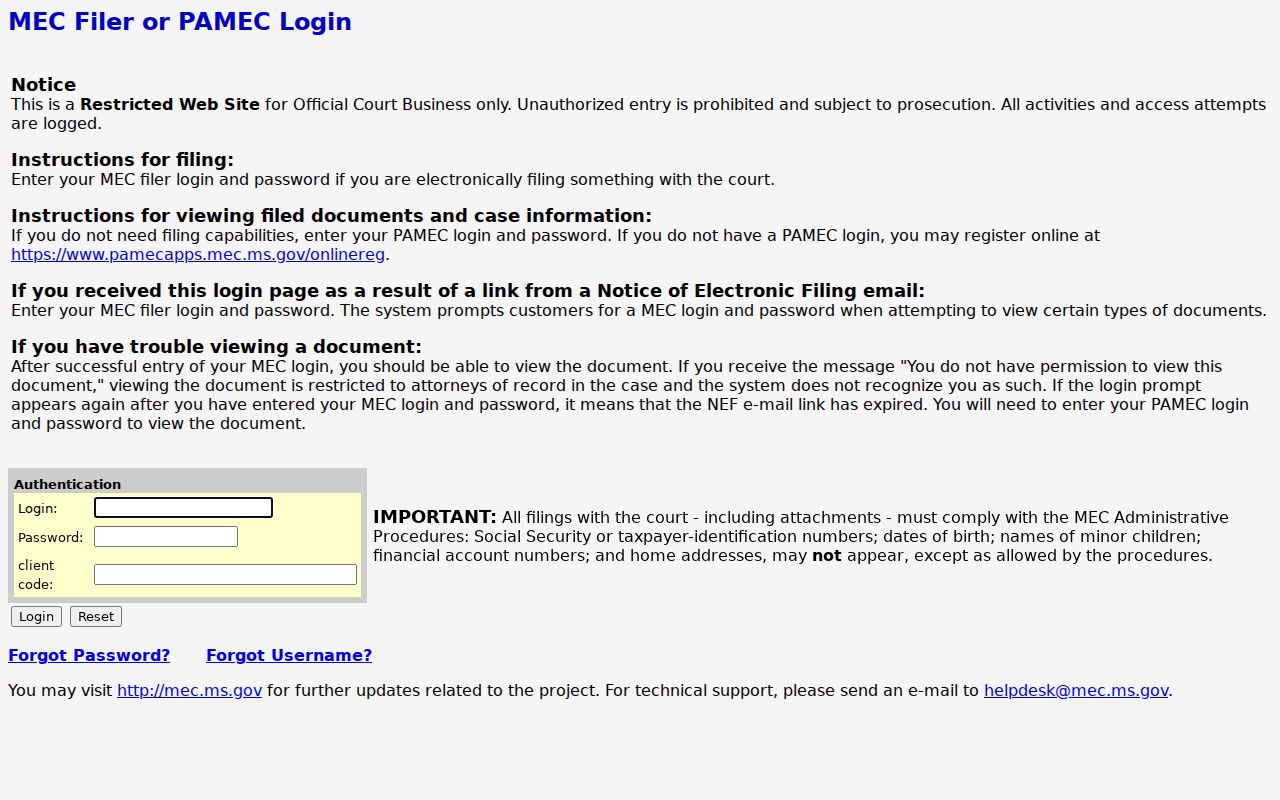
Keep any request narrow, and skip unnecessary birth dates, account numbers, home addresses, or details about minors.
Public Access to Civil Dockets
Mississippi's public-record framework comes from the Mississippi Public Records Act, Title 25, Chapter 61. Court files add another layer, though. They also answer to judicial authority, court rules, and judiciary policy. PAMEC remote access serves registered subscribers and non-restricted electronic cases. The in-person alternative is viewing at the courthouse or clerk office during regular hours under MEC procedures. Some files deserve extra care. Family, adoption, guardianship, mental-commitment, and minor-settlement matters can contain protected material.
Access reminder: Mississippi Code §25-61-5 addresses availability subject to exemptions and reasonable procedures. Section 25-61-7 addresses actual-cost charges where the Act applies. Court-specific copy and certification schedules can be different, so confirm the current charge with the clerk before ordering.
PAMEC access fees and clerk copy fees are separate things. The annual account costs $10, and results run $0.20 per page. Statutes set copy fees for Circuit and Chancery records. Yet Covington County publishes no single fee sheet that covers every civil court and request type. So ask the clerk what kind of item you need. A docket sheet, an image, an uncertified copy, a certified copy, a transcript, or a final record may each carry its own cost.
Covington Civil Docket Federal Route
Federal civil cases live in a separate record system. Covington County falls in the Southern District of Mississippi's Eastern Division. Hattiesburg is the relevant federal location. PACER handles the federal side: case-locator searches, docket reports, filed documents, orders, and judgments. Keep it apart from a Mississippi MEC or county civil docket result. The Southern District county listing places Covington County in the Eastern Division.
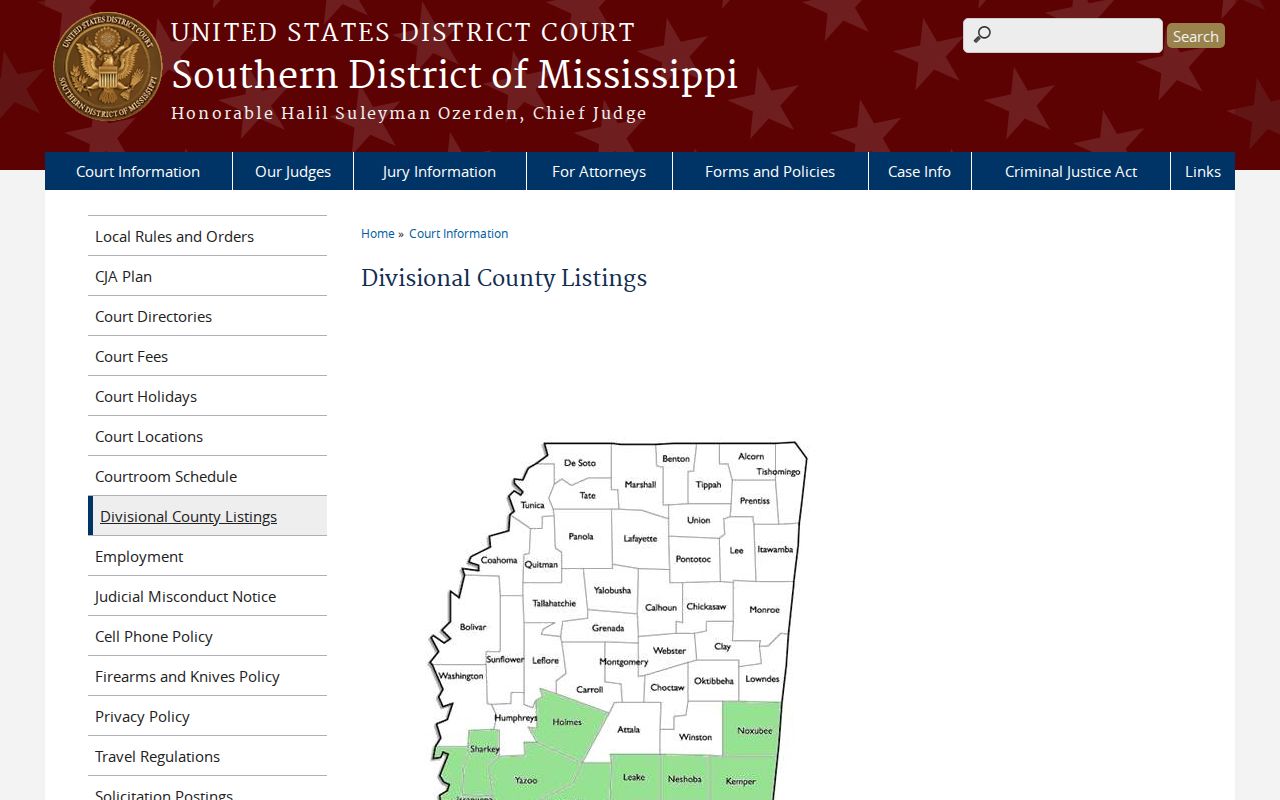
The federal route matters when a state-court search misses the case you expected. PACER's current pricing page sets out the federal service's separate fee structure and quarterly billing conditions.
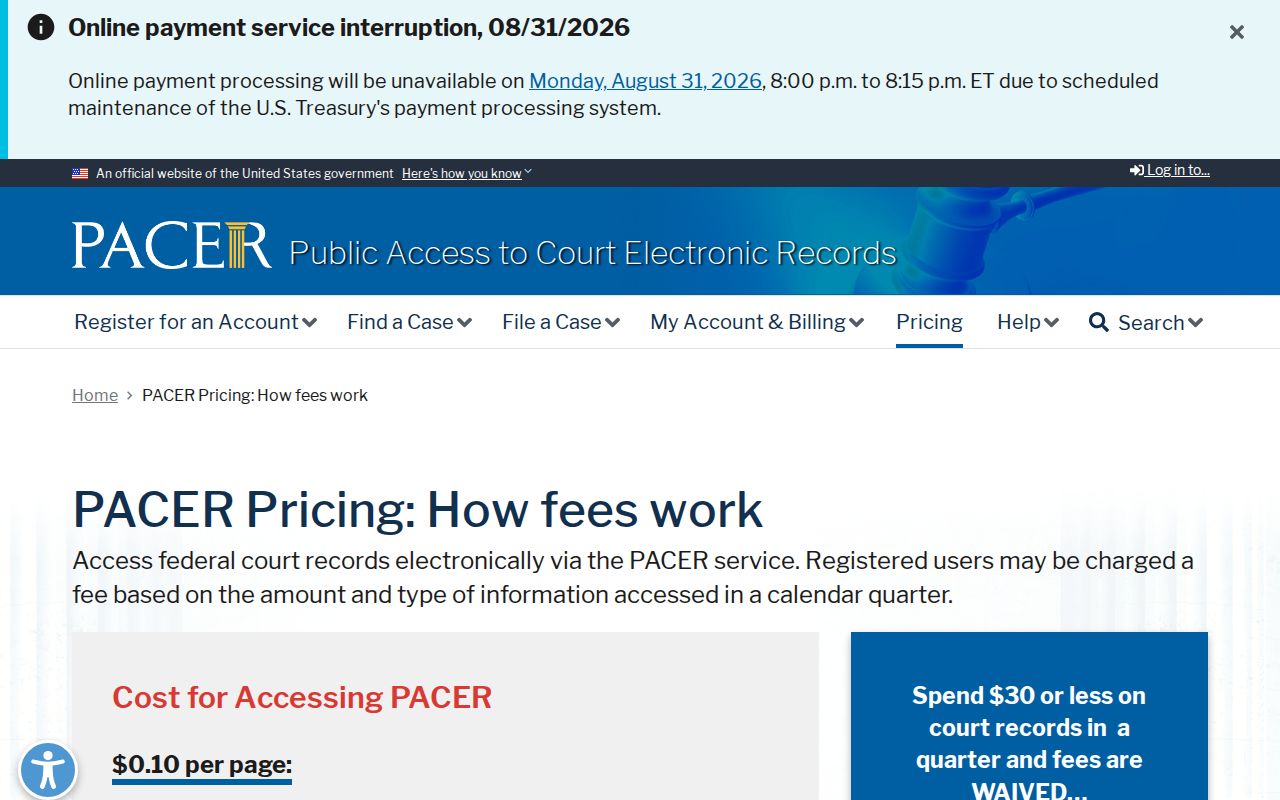
Check the current PACER fee page before relying on any charge.